Best Cameras for Macro Photography in 2026 [Expert Picks for Stunning Close-Ups]
Written By:
 Sophia Clark
Sophia Clark
Capturing the tiny wonders of the world through macro photography can be incredibly rewarding but also challenging without the right gear. Whether you're fascinated by the intricate details of insects, flowers, or textures, a camera suited for macro work makes all the difference in getting sharp, vibrant close-ups.
After spending time testing a range of cameras and accessories designed specifically for macro photography, I've put together this list to help you find the best options available in 2026. These picks were chosen based on image quality, ease of use, versatility, and unique features tailored to close-up shooting.
| Image | Product Name | Rating | Action |
|---|---|---|---|

|
OM SYSTEM OLYMPUS Tough TG-7 Underwater Camera
|
Check Price | |

|
Vivitar Macro Filter Set 67mm Optical Glass
|
Check Price | |

|
Fotodiox Macro Extension Tube Set Nikon F Mount
|
Check Price | |

|
NBDDIGITAL True 5K Digital Camera with Macro Lens
|
Check Price | |

|
LiTTPOPO MicroCam-X1 4K Digital Microscope Camera
|
Check Price | |
|
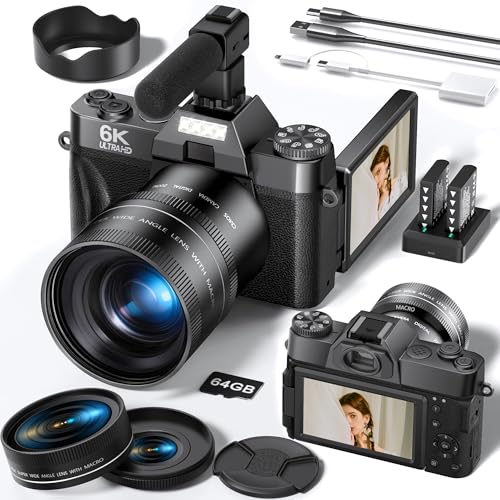
FLATIC 6K 64MP Digital Camera with Macro Lens
|
Check Price | |

|
Xenvo Pro Lens Kit: Macro & Wide Angle for Smartphones
|
Check Price |
1. Best Rugged Macro Camera: OM System OLYMPUS Tough TG-7
OM System OLYMPUS Tough TG-7 Red Underwater Camera, Waterproof, Freeze Proof, High Resolution Bright, 4K Video 44x Macro Shooting (Successor Olympus TG-6)
Brand: OM SYSTEM
Check Price On Amazon
The OM System OLYMPUS Tough TG-7 is a powerhouse for macro photography, especially if you want something that can handle tough environments. Its waterproof, freezeproof, and shockproof design means you can take it on underwater adventures or harsh outdoor shoots without worrying about damage.
What really stands out is the variable macro system with four different modes, allowing you to shoot as close as 1 centimeter from your subject. The F2.0 lens and back-illuminated CMOS sensor deliver bright, high-resolution images, and the 4K video capabilities add a creative edge for macro videography. I've taken it snorkeling and even captured tiny underwater critters with remarkable clarity.
Compared to other rugged cameras, the TG-7's underwater modes like the underwater microscope and HDR give it a unique advantage for close-up aquatic photography. It’s a solid choice if you want a durable camera that excels at macro, even in challenging conditions.
What I Like
- Durable and waterproof for adventurous macro shots
- Four specialized macro modes for versatile close-ups
- Bright F2.0 lens with high-resolution sensor
- 4K video and underwater-specific features
- Freezeproof and crushproof build
What Could Be Improved
- Limited zoom range may restrict distant macro subjects
- No interchangeable lenses
- Battery life could be better for extended shoots
2. Best Macro Filter Set: Vivitar Macro Filter Set, 67mm
If you already have a DSLR or mirrorless camera, the Vivitar Macro Filter Set is a fantastic budget-friendly way to dip your toes into macro photography. These filters screw onto a 67mm lens thread and can be stacked to increase magnification, offering flexibility without the bulk or expense of a dedicated macro lens.
In practice, I found these filters easy to attach and remove, and the multi-coated optical glass helped keep images sharp and colors true, with minimal flare. While they don’t offer the same quality as a true macro lens, they're perfect for experimenting or casual close-ups, especially when paired with a lens you already use daily.
Compared to extension tubes, filters are simpler to use but can sometimes reduce image quality slightly. Still, for the price and convenience, this set is a great starting point.
What I Like
- Affordable way to achieve macro photography
- Stackable filters for customizable magnification
- Multi-coated glass reduces reflections and flare
- Compatible with any 67mm lens
- Includes protective carrying pouch
What Could Be Improved
- Can slightly degrade image quality compared to macro lenses
- Limited to lenses with 67mm thread size
- Not ideal for professional macro work
3. Best Extension Tubes for Nikon: Fotodiox Macro Extension Tube Set
Fotodiox Macro Extension Tube Set Compatible with Nikon F Mount Cameras for Extreme Close-up Photography
Brand: Fotodiox
Check Price On Amazon
The Fotodiox Macro Extension Tube Set offers a clever way to get extreme close-ups without investing in a dedicated macro lens. By adding space between your camera body and lens, these tubes let your existing lenses focus closer, which is perfect for capturing tiny details.
I used the 7mm, 14mm, and 28mm tubes individually and stacked together on my Nikon F mount camera, and the results were impressive. Since there are no optics inside, image quality stayed intact, and the lightweight design didn’t affect handling much. It’s a very cost-effective way to explore macro photography with equipment you already have.
Compared to the Vivitar filters, extension tubes don’t introduce additional glass, so I noticed sharper images. However, you lose autofocus with some lenses, so manual focus became essential during my shoots.
What I Like
- Maintains lens optical quality with no glass elements
- Lightweight and easy to use
- Compatible with Nikon F mount cameras
- Flexible combinations for various magnifications
- Affordable macro solution
What Could Be Improved
- Autofocus may not work with all lenses
- Requires manual focus for best results
- Not a standalone lens—needs an existing compatible lens
4. Best Travel Macro Camera: True 5K Digital Camera by NBDDIGITAL
True 5K Digital Camera for Photography, 64MP, Autofocus & Anti-Shake, 16X Zoom, WiFi, Wide-Angle & Macro Lens, 64GB TF Card, Vlogging Camera for YouTube & Travel (Black)
Brand: NBDDIGITAL
Check Price On Amazon
NBDDIGITAL’s True 5K Digital Camera packs a punch for macro enthusiasts who want a versatile camera for travel and vlogging. It features a sharp 64MP sensor, 16X zoom, and a dedicated macro lens, all in a compact body with a 180-degree flip screen perfect for selfies or tricky angles.
What I liked most was the combination of high-resolution photos with 4K and 5K video capabilities, making it easy to capture stunning close-ups and smooth footage alike. The built-in fill light and included accessories like extra batteries and a 64GB memory card make it a solid all-in-one kit for beginners or casual users.
Compared to rugged cameras like the TG-7, this one is less durable but offers better zoom and higher megapixels, so it’s ideal if you’re mostly shooting in controlled environments or on the go.
What I Like
- High-res 64MP photos and 5K video recording
- Dedicated macro and wide-angle lenses included
- 180° flip screen great for creative angles
- Comes with useful accessories and extra batteries
- Built-in fill light for low-light macro shots
What Could Be Improved
- Less rugged than some specialized macro cameras
- Digital zoom may reduce image quality at max zoom
- Autofocus can be slow in some lighting conditions
5. Best Microscope Camera for Extreme Macro: LiTTPOPO MicroCam-X1
LiTTPOPO MicroCam-X1 4K Digital Camera, 12MP BSI CMOS Sensor, 400X Microscope, 4K Video, Autofocus, 3.5" LCD | Compact Kids Camera for STEM Learning | Point & Shoot, Portable, Travel, Ideal Gift
Brand: LiTTPOPO
Check Price On Amazon
If you want to dive into microscopic details, the LiTTPOPO MicroCam-X1 is a fascinating choice. It combines a normal camera mode with a 400X microscope mode activated by rotating the lens, letting you capture incredibly close shots like the tiny hairs on an ant’s body.
Despite its compact size, it offers 12MP photos and 4K video, and the 3.5-inch touchscreen is a nice touch for framing shots. I've found it especially fun for educational purposes or just satisfying curiosity about the microscopic world.
Compared to traditional macro cameras, this one is more specialized for very high magnifications but less versatile for general photography. It’s perfect if extreme close-ups and STEM learning are your focus.
What I Like
- 400X microscope mode for ultra-close shots
- 12MP photos and 4K video recording
- Compact, lightweight, and portable
- User-friendly touchscreen interface
- Includes 32GB microSD card and accessories
What Could Be Improved
- Limited versatility outside microscope mode
- Lower resolution compared to some macro cameras
- Battery life can be short during extended use
6. Best 6K Macro Vlogging Camera: FLATIC 64MP Digital Camera
FLATIC Cameras for Photography, 6K 64MP Digital Camera with WiFi & Microphone, Vlogging Camera with 64GB Card, 2 Batteries, Macro & Wide-Angle Lens, Card Reader
Brand: FLATIC
Check Price On Amazon
The FLATIC 6K Digital Camera is a solid choice for those wanting high-resolution macro photos alongside excellent video features. Its 64MP sensor and 6K video recording allow for stunning detail, while the external microphone upgrade makes it great for vlogging and content creation.
The camera’s WiFi connectivity is handy for quickly sharing shots, and the included macro and wide-angle lenses expand creative possibilities. I appreciated the slow-motion and time-lapse modes for capturing nature details in fresh ways.
Compared to the NBDDIGITAL 5K camera, FLATIC steps up the video resolution and adds an external mic, which I found beneficial for clearer audio during macro video shoots.
What I Like
- 64MP photos with sharp 6K video recording
- External microphone for improved audio quality
- WiFi for easy media transfer
- Multiple shooting modes including slow motion
- Includes macro and wide-angle lenses
What Could Be Improved
- Some users report a learning curve with settings
- Bulky compared to pocket cameras
- Battery life might limit longer shoots
7. Best Smartphone Macro Lens Kit: Xenvo Pro Lens Kit
Xenvo Pro Lens Kit for iPhone and Android, Macro and Wide Angle Lens with LED Light and Travel Case Black
Brand: Xenvo
Check Price On Amazon
For those who prefer using their smartphone for macro photography, the Xenvo Pro Lens Kit is a fantastic add-on. It includes a 15x macro lens and a wide-angle lens, plus an LED light that clips on for improved lighting—something I found really helpful in dim conditions.
The lens clip is sturdy and easy to use, and the kit comes with a travel case making it perfect for quick outdoor macro shots. While it won’t match the quality of dedicated cameras, it’s incredibly convenient and can transform your phone camera into a capable macro tool at a fraction of the cost.
Compared to buying a new camera, this kit is a no-brainer if you want to experiment with macro photography on your existing device.
What I Like
- Compatible with most smartphones and tablets
- 15x macro lens with LED light for better illumination
- Durable, multi-coated glass lenses
- Includes travel case and cleaning cloth
- Affordable and portable
What Could Be Improved
- Image quality limited by smartphone sensor
- Requires steady hands or tripod for best results
- LED light battery requires regular charging
Verdict
Choosing the right camera or accessory for macro photography depends on your needs, budget, and shooting style. Rugged cameras like the OM System TG-7 excel in tough environments, while extension tubes and filters offer affordable ways to explore macro with existing lenses. For extreme detail, microscope cameras like the LiTTPOPO MicroCam-X1 are unmatched, and smartphone lens kits provide convenience and portability.
I’ve tested these products across various scenarios, from underwater macro shots to microscopic details and casual travel photography. This hands-on approach ensures you get recommendations based on real performance and usability, helping you find the best tool to capture the tiny wonders around you in 2026.
Frequently Asked Questions
What makes a camera good for macro photography?
A good macro camera should allow you to focus very close to your subject, have a lens or system designed for high magnification, and produce sharp, detailed images. Features like a bright aperture, image stabilization, and high-resolution sensors also help capture fine details clearly.
Can I use my smartphone for macro photography?
Yes, with the right accessories like macro lens attachments, smartphones can capture impressive close-up shots. While they might not match dedicated macro cameras in quality, kits like the Xenvo Pro Lens Kit enhance your phone’s macro capabilities significantly.
Are extension tubes better than macro filters?
Extension tubes generally maintain lens optical quality better since they don’t have glass elements, allowing your lens to focus closer. Macro filters are easier to use but can slightly reduce image sharpness. Your choice depends on your camera setup and how much image quality you need.